A Treasure to be Shared
Part of coming into the full communion of the Roman Catholic Church was receiving the blessed gift of a Missal, Breviary and other books approved by the Holy See which expressed Anglican spirituality within the Catholic Church. Pope Benedict XVI called them “a treasure to be shared”
Divine Worship: The Missal (DW:TM) may look at first glance to be an English translation of the Traditional Latin Mass, but it is more than that. That it is a vernacular Missal [i.e. in a language other than Latin] means it could only be a product of the Second Vatican Council. There are prayers and responses not found in any other Roman Catholic Missal, so I thought it might be helpful to reflect on what the Holy See has approved.
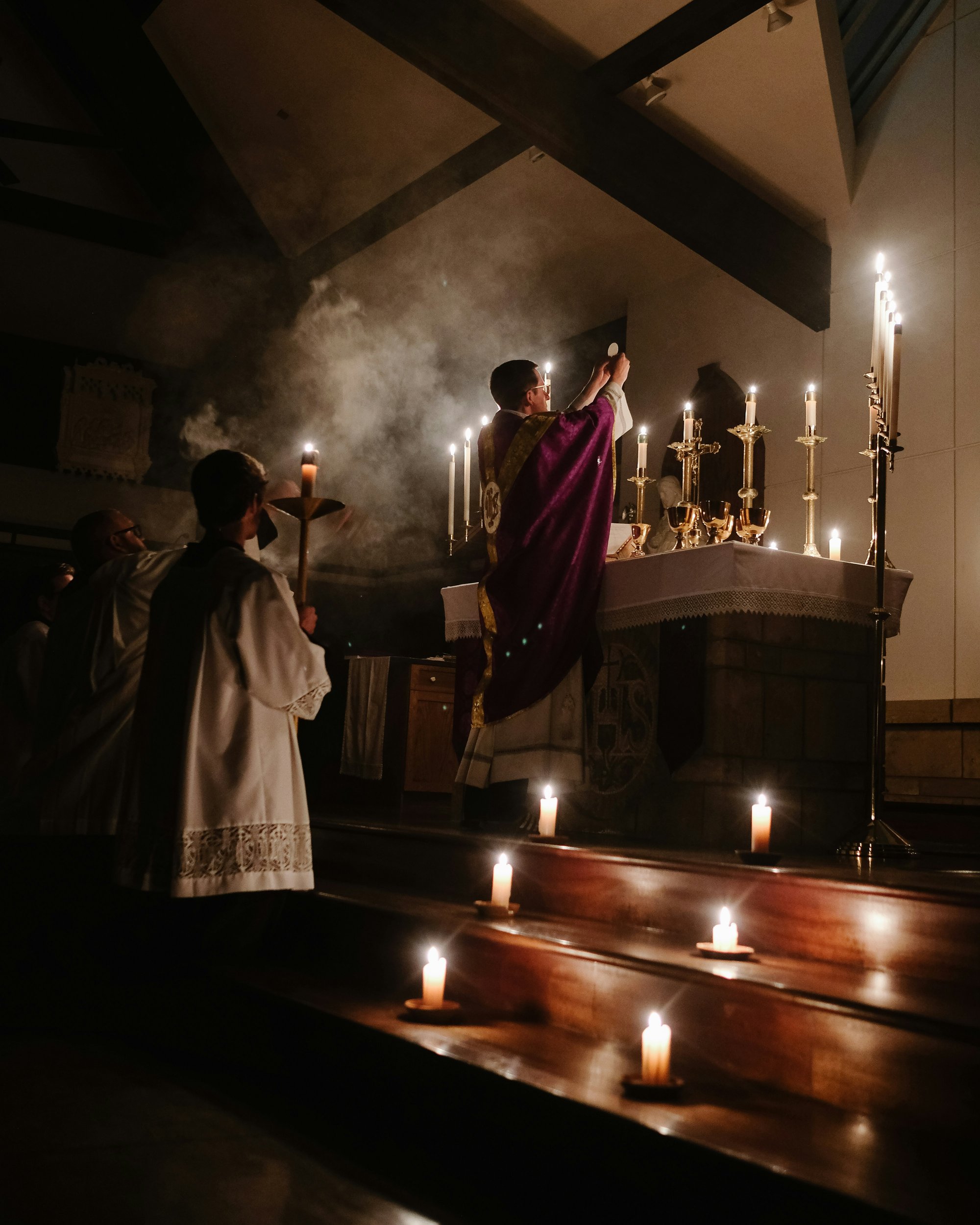
Posture, whether towards the East (ad orientum) or facing the people (versus populum) is to direct our hearts and minds to the worship of Almighty God. You are already familiar with the latter, so a few words on the former. One effect of an ad orientum Mass is that there is no doubt when the celebrant is addressing the people because he turns to face them. It can be humbling to realize just how much of the Mass is directed towards God! Another consideration is that the priest and people face God together, so there can be a sense of unity as well.
According to DW:TM the penitential rite begins at the foot of the altar, or else is at then end of the Liturgy of the Word. The first prayer “The Collect for Purity” was used in England back when England was Catholic and is a good reminder before whom we stand! This is followed by the Two Great Commandments or Summary of the Law, which is again helpful in establishing priorities. There is an option for saying the Decalogue (10 Commandments) in place of the Summary of the Law and the Kyrie. In the form provided, after each commandment the people respond “Lord, have mercy upon us, and incline our hearts to keep this law.” the 10th commandment concludes .”and write all these thy laws in our hearts, we beseech thee.”
Mass proceeds with the Liturgy of the Word. There are verses called the Gradual provided for Sundays and feast days which can take the place of the responsorial psalm. Also on Sundays and feast days, the Nicene Creed follows the homily. You might note that while Anglicans had no difficulty singing “consubstantial, coeternal” in hymns, the Nicene Creed reads “being of one substance with the Father.” There is also the direction to genuflect at the mention of the incarnation. (A solemn bow will do for those unable to kneel.)
If the Penitential Rite was not done at the foot of the altar, it follows here. Lovely lines omitted by Canadian Anglicans, but restored by Rome: “We...are heartily sorry for these our misdoings; the remembrance of them is grievous unto us, the burden of them is intolerable.”
The Liturgy of the Word concludes with Scriptural assurance of God’s desire to forgive, known as the Comfortable Words.
I look forward to concluding with the Liturgy of the Eucharist next time!
Father Kipling Cooper